Tusundong: Anhai Sandworm Jelly
A cool, bouncy seafood jelly from coastal mudflats — love it or leave it, unmistakably Quanzhou.
Updated 2026-08-06 · 506 words
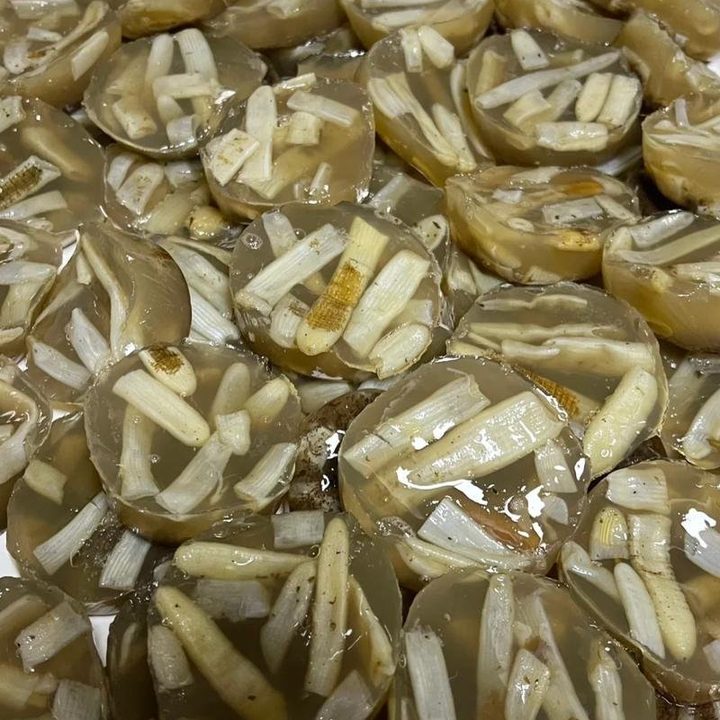
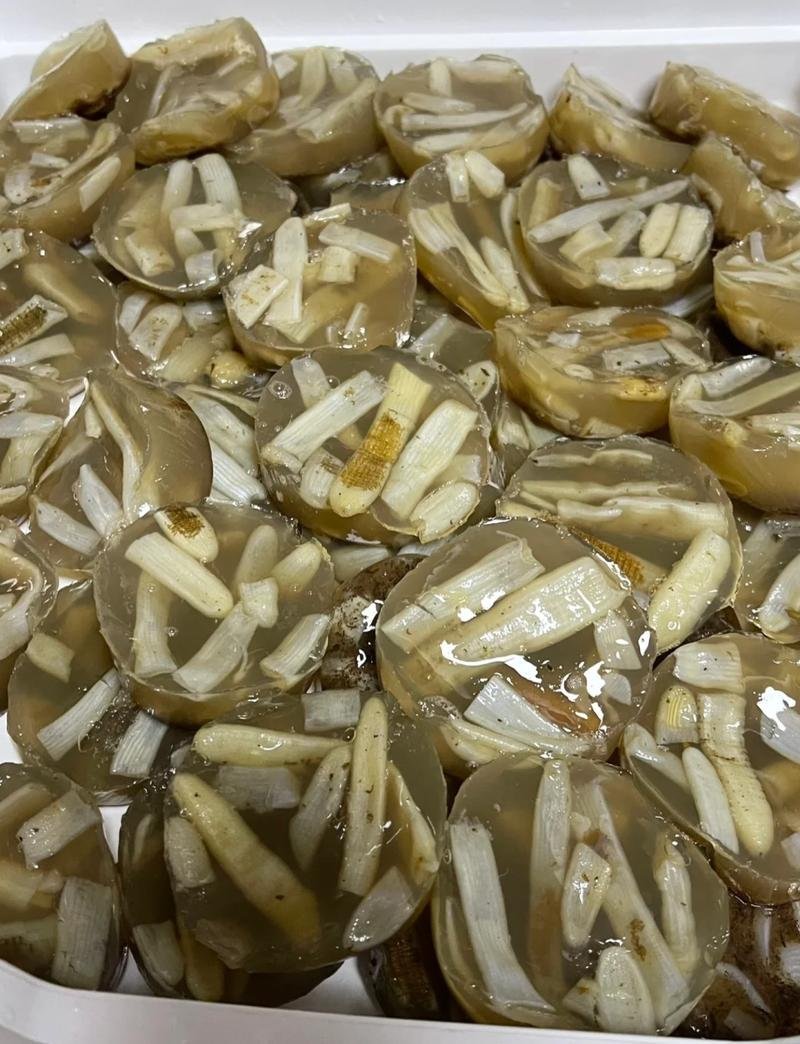
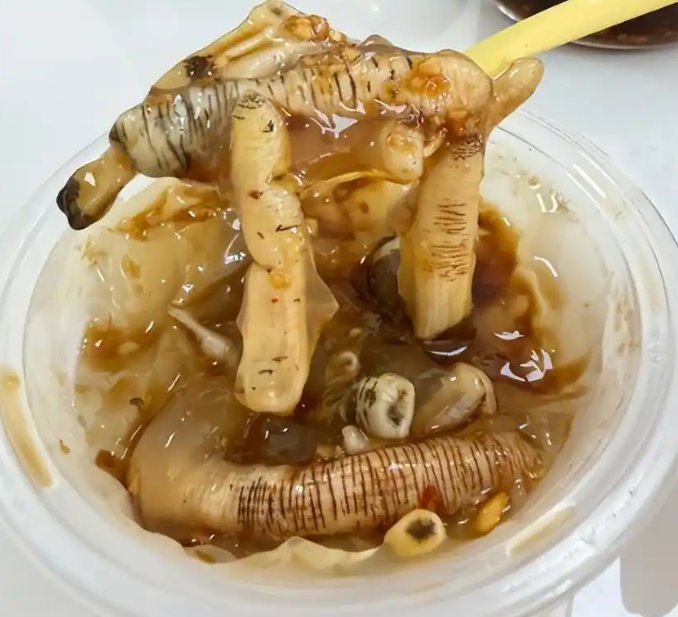
First-timers often stall at the name: how do you make jelly from bamboo shoots? You don’t. Tusundong has nothing to do with bamboo. The “sandworm” is a sipunculid that lives in coastal mudflats. Locals know it as a soft finger-thick creature; cleaned and simmered, its own collagen sets the broth into a gray-white, translucent jelly. Anhai in Jinjiang is the place people name first. Villages by the old bridge flats once seemed to cook it in every kitchen. Good bowls use no added gelatin—only what the worm gives. Live worms are purged, rinsed, pressed clean, boiled until the liquid turns sticky, then ladled into small cups to cool. A dark base often means guts weren’t fully cleaned; clear jelly with visible threads reassures regulars.
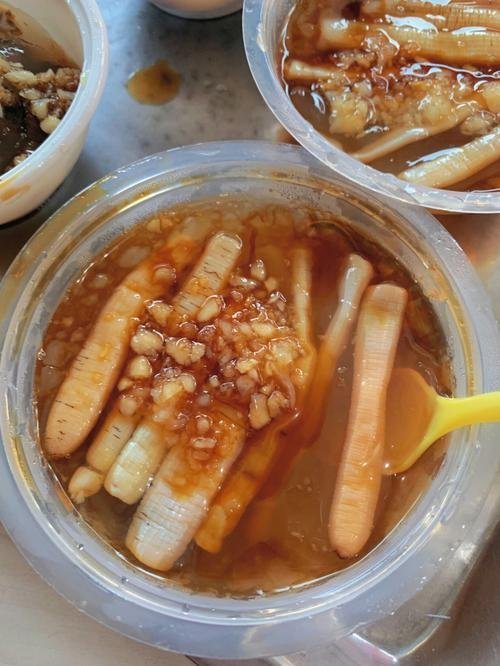
It arrives cold. A spoon breaks it easily. Dress with garlic, soy, and Yongchun aged vinegar; mustard or chili if you like. Get the vinegar-garlic balance right and the bowl wakes up. First comes a cool quiver, then a gentle chew from the meat, clean and oceanic rather than fishy. Try not to fixate on the word “worm.” Eyes closed, it eats closer to a light seafood aspic. Fans can finish several cups; others call it “dark cuisine” and keep their distance. Both reactions are normal in Quanzhou. Summer is peak season; in winter some people still drive to Anhai for a cold plate with drinks. Many shops are self-serve: take from the fridge, mix your own sauce, sit on the doorstep when tables fill. Short on time? City snack shops carry it. Want the real rhythm? Give Anhai half a day.
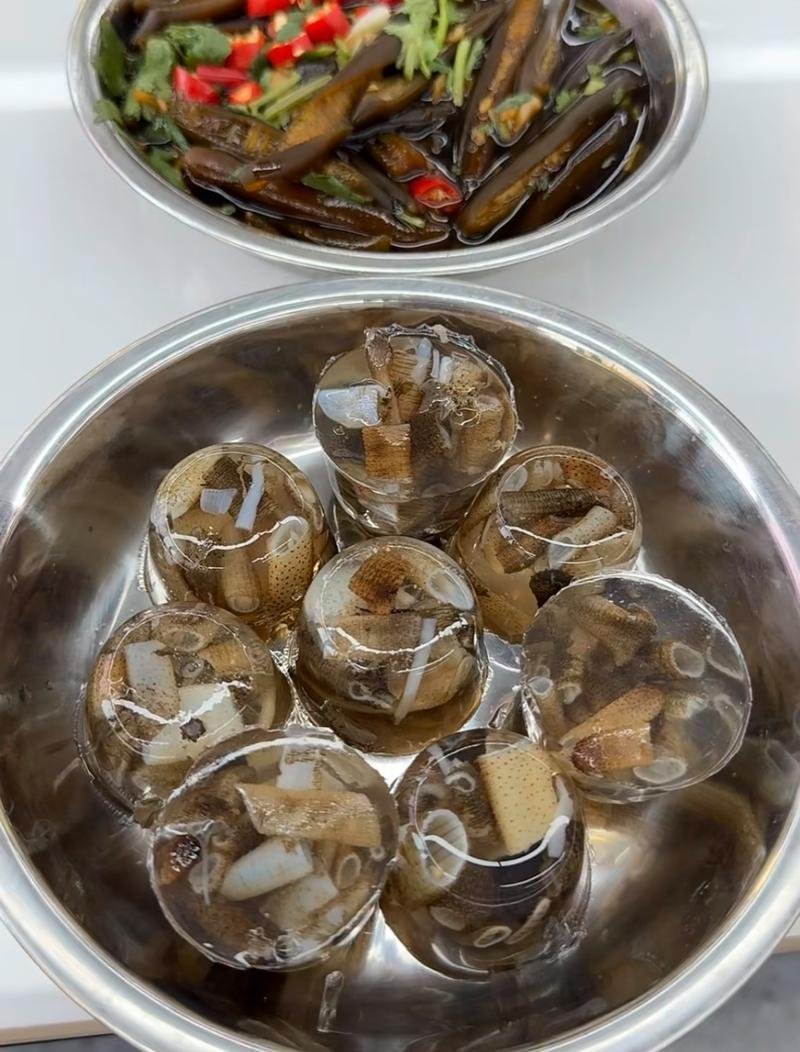
Old notes already mention “mud shoots” on the beach. Folklore credits Zheng Chenggong’s or Qi Jiguang’s soldiers with cooling the soup into jelly and liking it better that way. The stories are colorful; the hard part is still the washing and the water-to-heat judgment, passed hand to hand. Wood-fired pots and no gelatin remain a line some shops won’t cross. The craft joined Quanzhou’s heritage list in 2013. Nervous? Order a small portion and lean on the vinegar. If you smile after the first spoon, ask where this season’s worms come from—local flats yield less now, so stock often travels. The garlic-vinegar freshness is still how many travelers remember the city. Squatting on a step in summer with a cold cup feels more like travel than any private room.
On-the-ground tips
Quanzhou rewards repeat visits to the same lane at different hours — morning soup stalls, afternoon tea pauses, and evening light on stone change the feel completely. Build one slow block into each day instead of chasing every pin on the map.
Screenshot Chinese names for stops and hotels; show maps to drivers. If a queue looks performative for tourists, walk one block — the second shop is often where locals eat.
Pair with nearby guides
Combine this page with our Discover introductions (Why Visit Quanzhou, First-Timer Mistakes) and the Quanzhou Food or 18 Scenic Spots topics for dish-level and site-level detail.
Corrections welcome: scoscar@gmail.com with this page URL.
Last updated: 2026-08-06 · Visit Quanzhou editorial team · Report an error
Related guides
Mianxianhu: Quanzhou’s Morning Noodle Paste
Thin wheat noodles in savory paste, topped your way — the breakfast bowl that wakes old Quanzhou.
Hailijian: Coastal Oyster Omelette
Hot pan, sweet-potato starch, plump oysters — night-market sizzle from Xunpu to the old town.
Jiangmu Duck: Old Ginger, Clay Pot Heat
Three-year ginger and muscovy duck in sesame oil — a pot worth sharing, summer or winter.
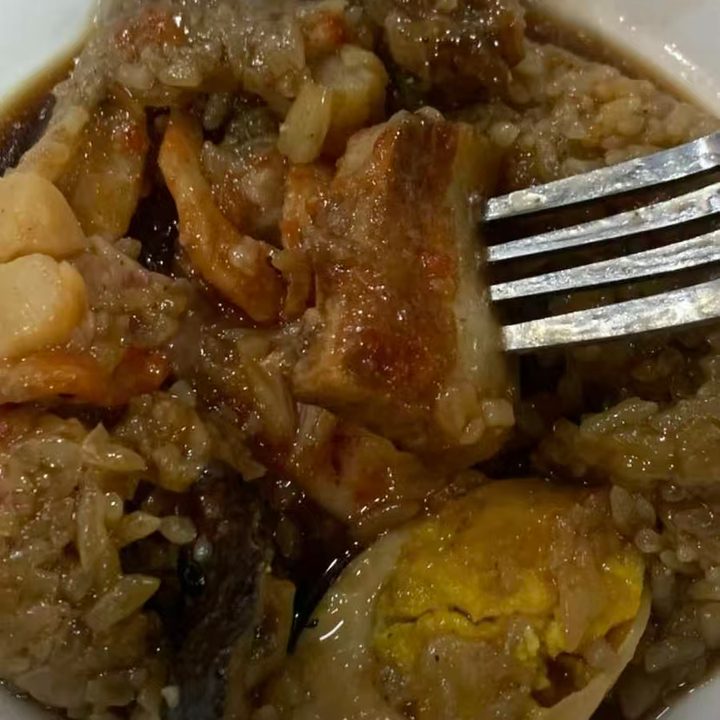
Quanzhou Rouzong: Hot Savory Rice Dumplings
Not a sweet zongzi — peel it hot, add sauce, and taste the port city’s land-and-sea filling.
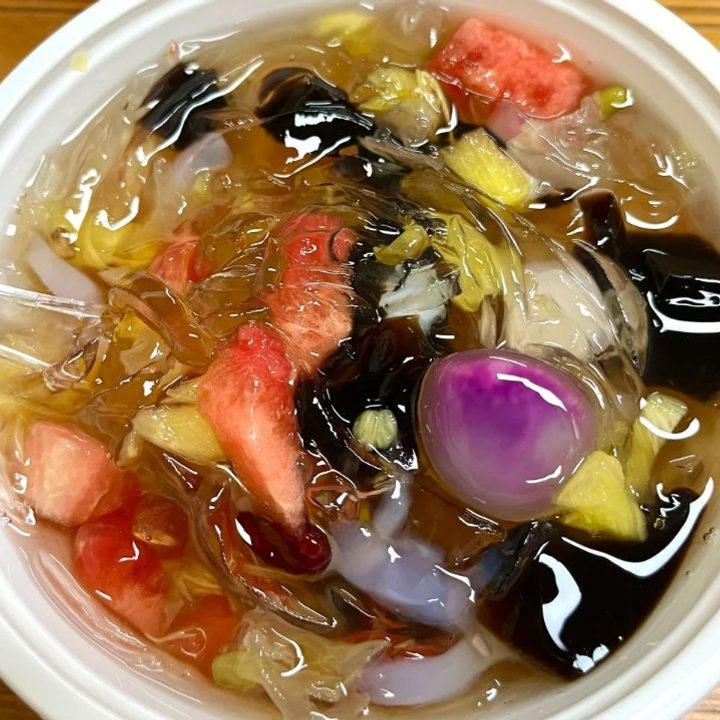
Siguotang: Summer Four-Fruits Sweet Bowl
Sea-moss jelly, beans, fruit, and ice — the easiest cool-down after temples and West Street.
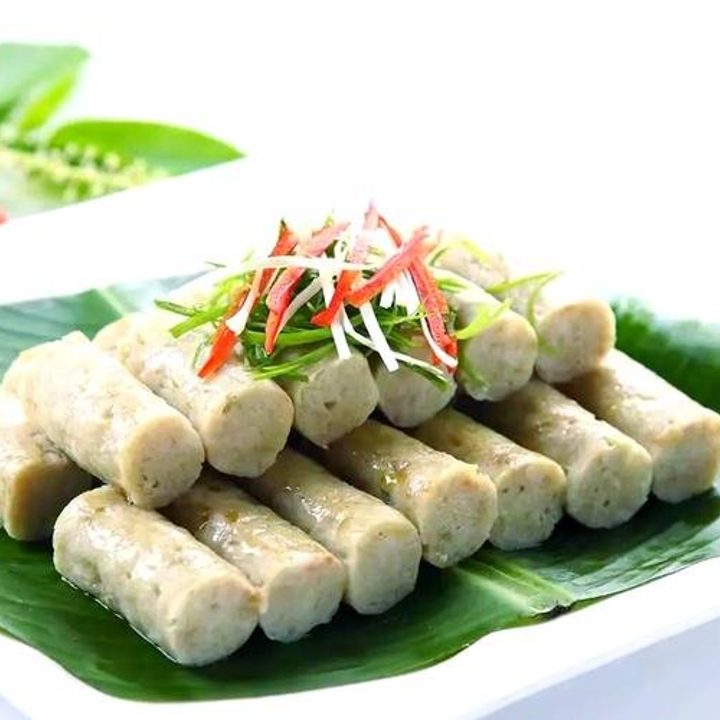
Chongwu Fish Roll: Harbor Fresh, Gift-Ready
Springy Spanish-mackerel rolls from Hui’an’s stone city — eat in soup, fry at home, take as gifts.