Qingjing Mosque: Song Stone and Islamic Quanzhou
China’s oldest surviving mosque site — pointed arches, museum room, and golden light on Tumen Street at dusk.
Updated 2026-08-07 · 768 words
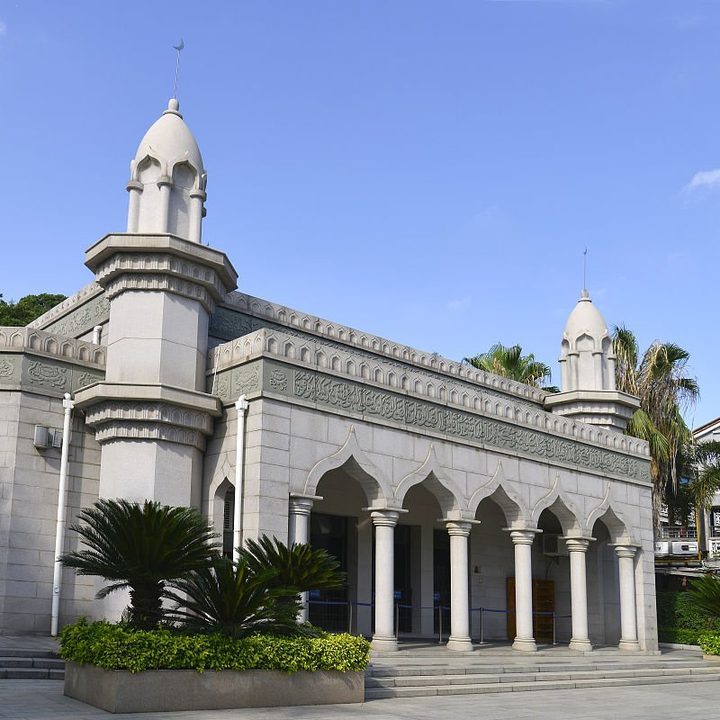
Qingjing Mosque at 108 Tumen Street is, for me, the most internationally resonant stop among Quanzhou's eighteen famous views. Founded in the eleventh century and rebuilt across later dynasties, it preserves some of the oldest Arab-influenced mosque architecture still visible in China — a granite and brick complex that speaks directly to the centuries when Persian and Arab merchants prayed in the same port city where Chinese traders loaded silk and porcelain onto ships. The poetic name "Mosque in Sunset" refers to the warm light that hits the stone walls in the late afternoon, turning the ruins and the surviving gate tower amber against the sky. It is also a practical anchor on any walking tour of Tumen Street, sitting within five to ten minutes on foot of Guan Yu Temple, the Confucian Temple, and Tianhou Temple at 1 Tianhou Road.
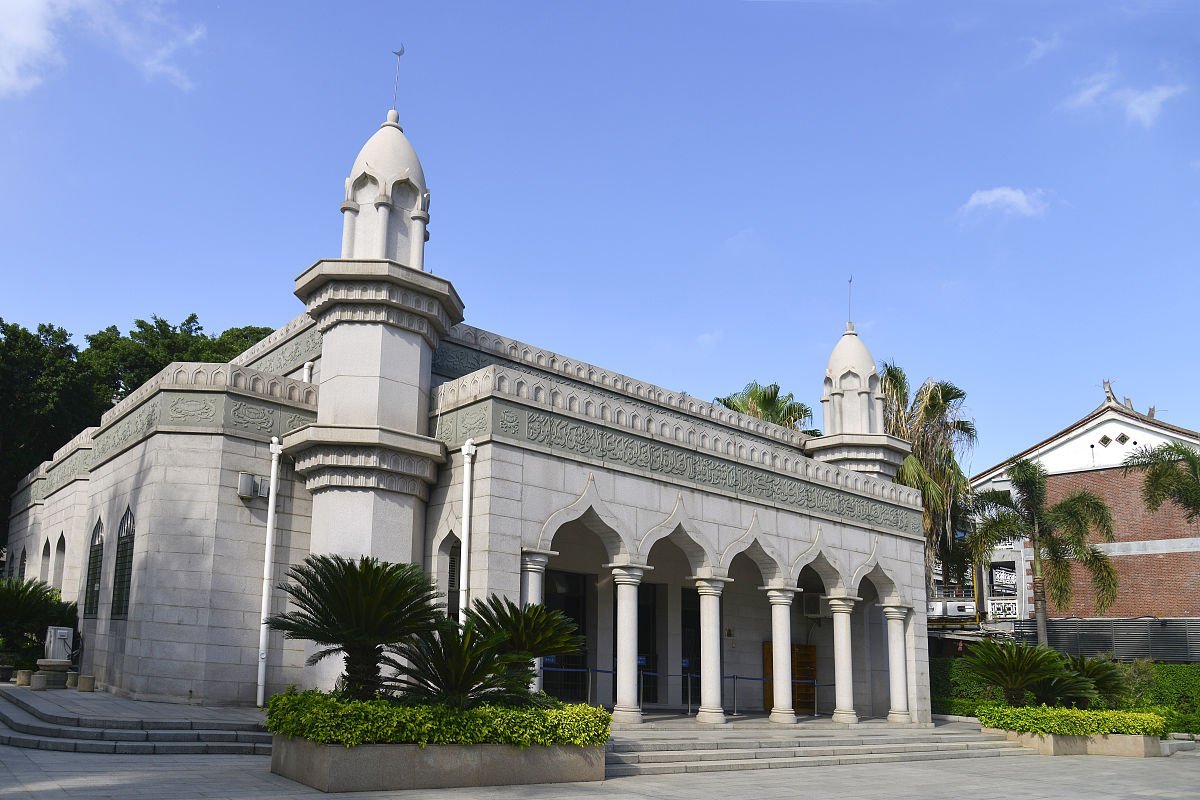
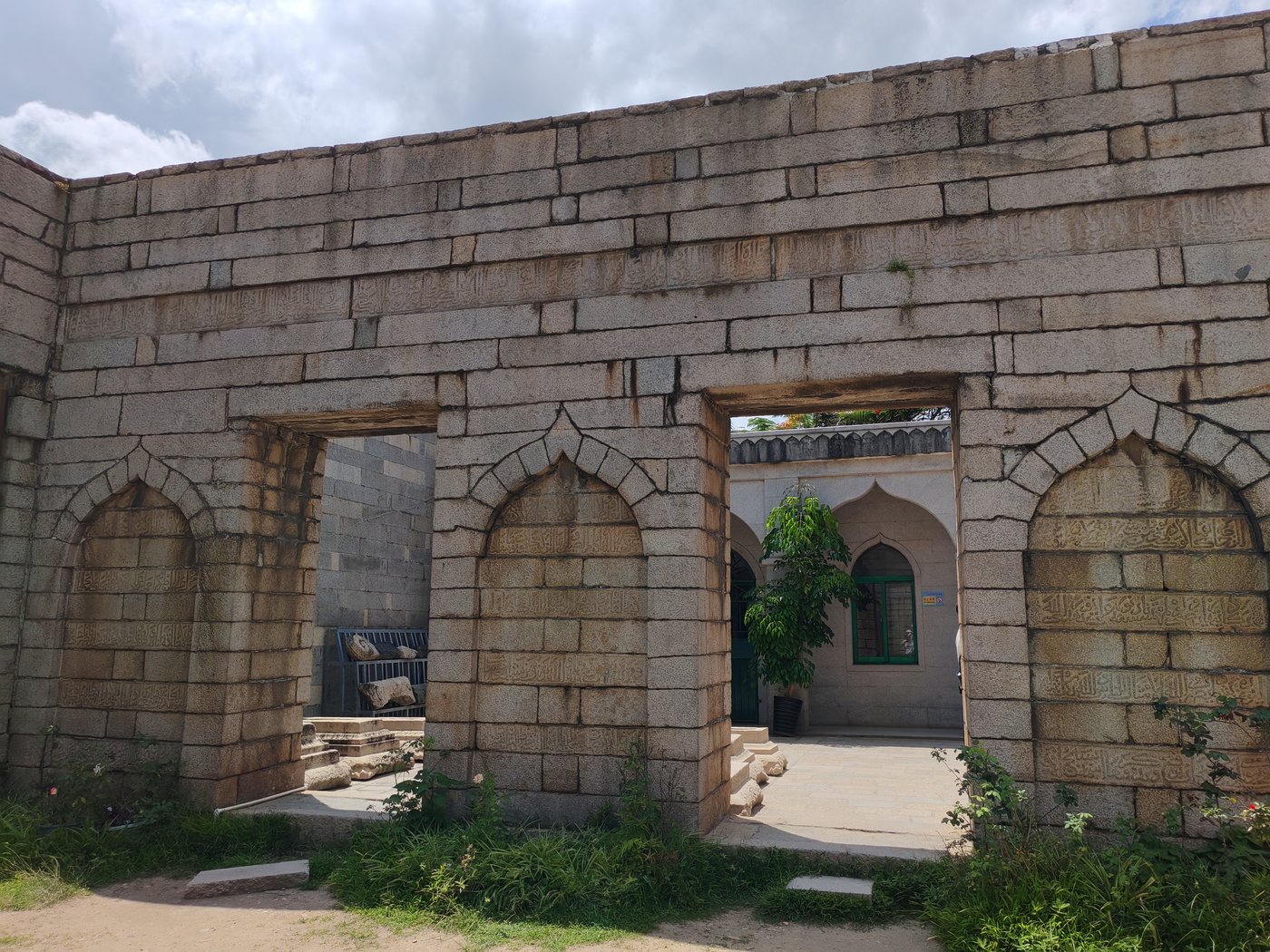
Tickets are only about three yuan, and the site is generally open from 8:30 to 17:30, though hours may shift on Fridays when the Muslim community gathers for Jumu'ah prayer, so ask staff at the entrance if you visit on a Friday afternoon. Your visit focuses on the historic gate tower, the ruins of the prayer hall, the Ming imperial stele issued by the Yongle emperor, and the exterior of the rebuilt prayer hall — non-Muslim visitors usually do not enter the inner prayer space, and that boundary should be respected calmly and without argument. Muslim travelers are welcome to inquire about prayer arrangements for that day; staff can point you to the appropriate area if worship is underway. Even a short visit gives foreign guests a tangible link to Quanzhou's role as a meeting point of cultures long before the word "globalization" existed.
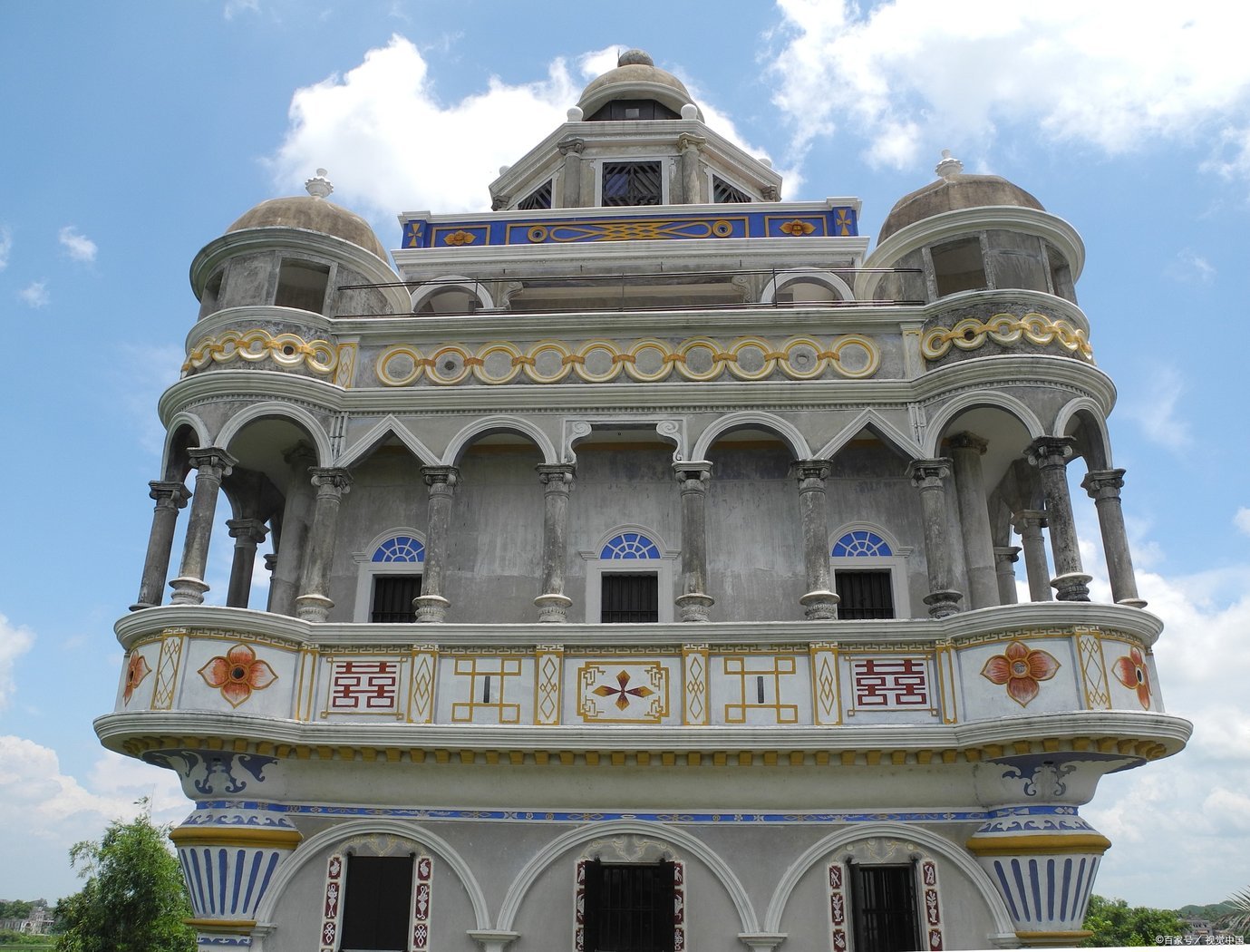
Dress modestly before you arrive: cover shoulders and knees, choose comfortable shoes for uneven stone, and treat the ancient masonry as irreplaceable — no touching with sharp objects, no carving, no leaning with backpacks that could scrape the brick. The best photography window is roughly the thirty minutes before sunset, when the walls glow and the shadows lengthen across the courtyard. Tumen Street remains busy at that hour, so keep an eye on your bag and step aside for worshippers rather than blocking pathways while setting up a shot. If you are traveling with a group, remind everyone to lower their voices near the ruins; this is still an active religious site, not only a heritage backdrop.
After your visit, the street itself rewards wandering. Try halal beef snacks from the Muslim-run food shops nearby, or pick up a fresh spring roll from vendors working farther along the lane toward the other temples.
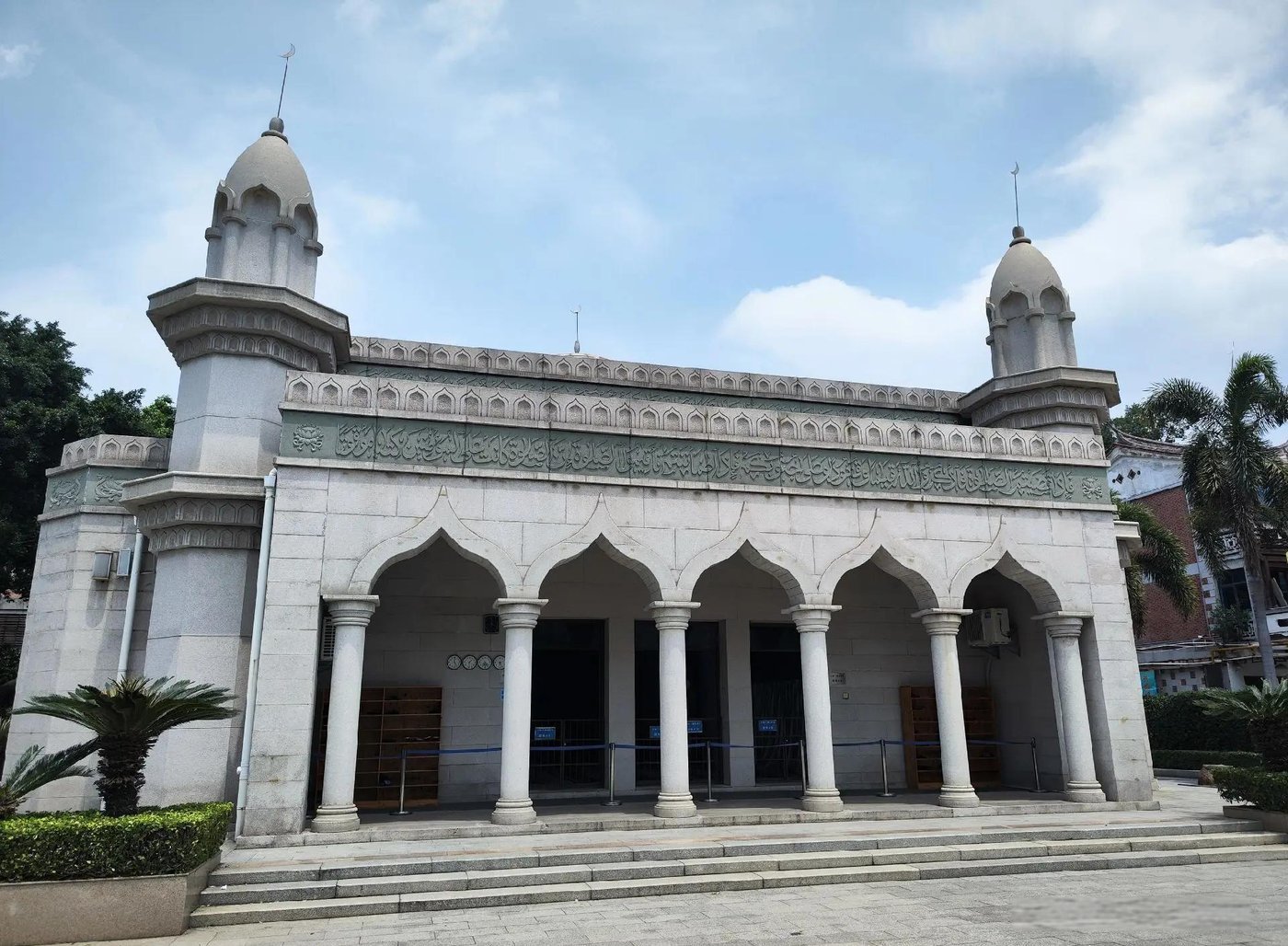
Standing here, you can literally look across to Tianhou Temple and feel the city's history as a meeting place rather than a single culture frozen in time. Quanzhou was built on exchange — trade, belief, language, food — and Qingjing Mosque is one of the clearest stones still standing where that exchange happened. Come for the sunset if you can, but come with respect first; the golden light is beautiful because the place beneath it is real. Plan to spend thirty to forty-five minutes inside if you read the stele and walk the full courtyard slowly. Because the ticket costs almost nothing, this is an easy yes even for travelers with only one afternoon in the old city — and pairing it with Tianhou Temple across the lane gives you two world religions and two architectural languages within a single short walk. That combination is rare anywhere in China, and in Quanzhou it is simply part of daily life on Tumen Street. Before you leave, take one last look at the granite walls in the slanting light — "Mosque in Sunset" is not a marketing phrase here, it is what the stone actually does when the day turns gold, and it is worth timing your visit to see it once with your own eyes. Entry costs only about three yuan, so even a short stop fits any budget, and the walk from Guan Yu Temple or the Confucian Temple takes less than ten minutes through lively Tumen Street, where halal beef stalls and spring-roll vendors keep the neighborhood fed and busy until evening. On Fridays, ask at the gate about Jumu'ah hours before you plan a sunset visit — schedules can shift, and a two-minute check saves disappointment if the courtyard closes earlier than usual. Dress modestly, do not mark the ancient stone, and step aside for worshippers; respect here is simple, and it keeps the site welcoming for everyone who comes to see one of Quanzhou's most international views.
Last updated: 2026-08-07 · Visit Quanzhou editorial team · Report an error
Related guides
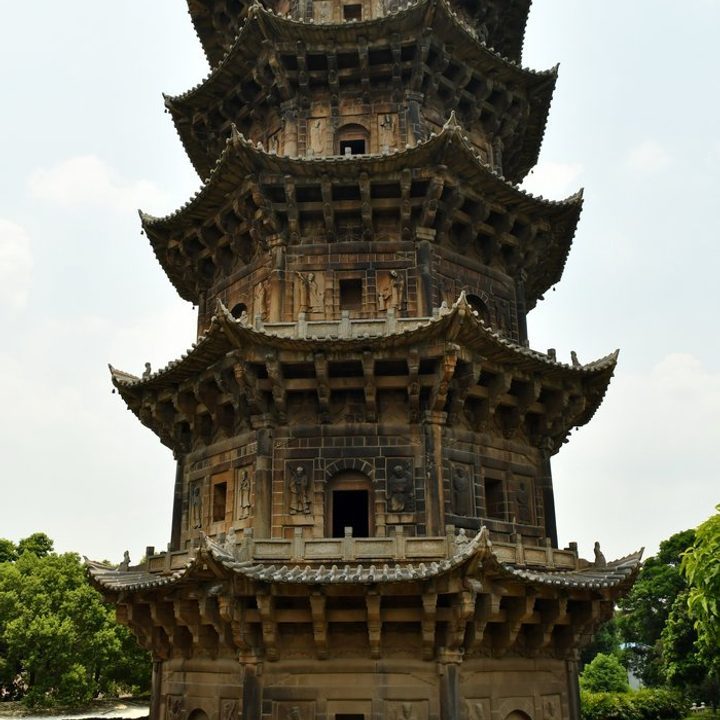
Kaiyuan Temple: Twin Pagodas Over West Street
Song-era stone towers, Tang halls, and a living monastery on Quanzhou’s busiest heritage street — plan 90 minutes and arrive early.
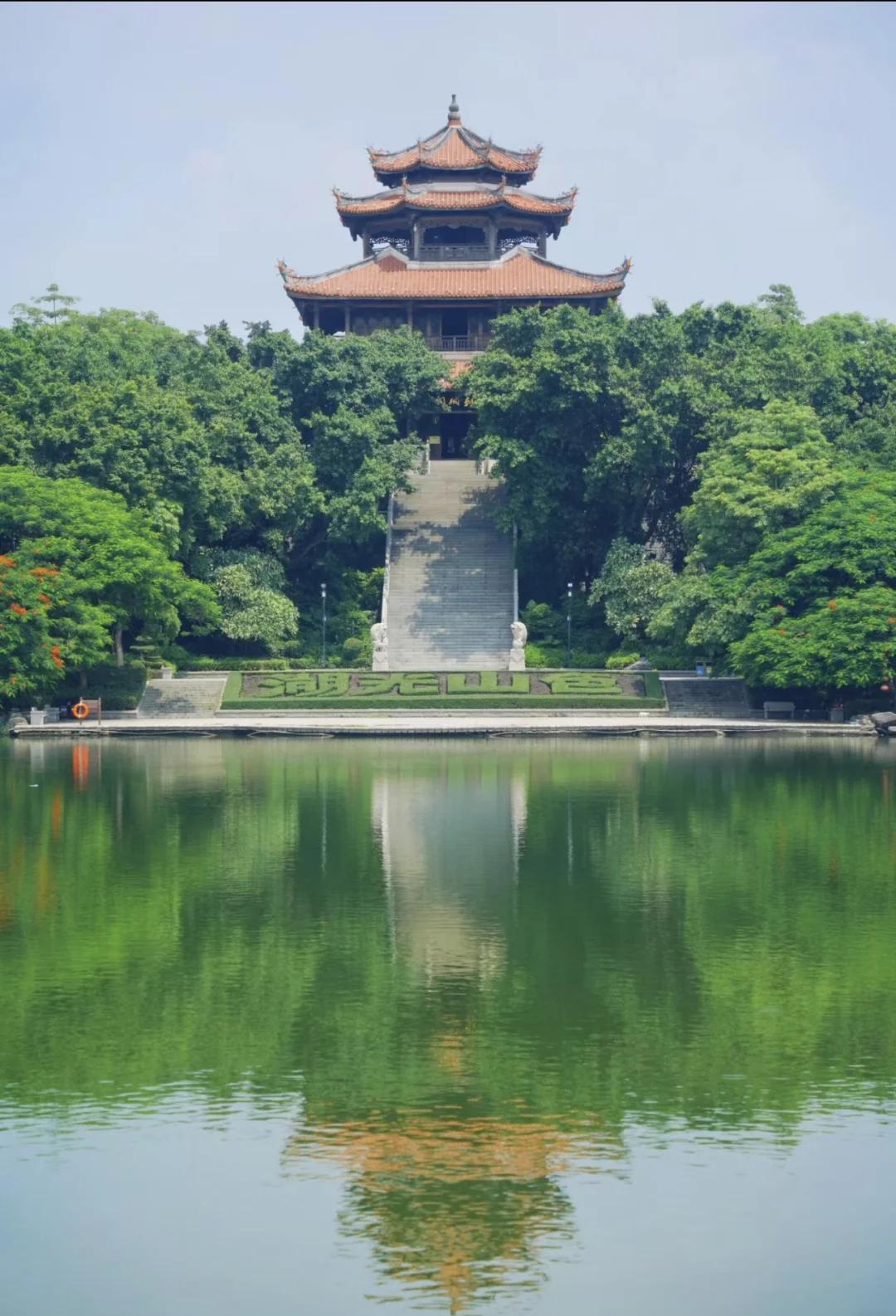
Quanzhou West Lake: Pagodas, Bonsai, and Morning Walks
City lake west of Kaiyuan Temple — free entry, flat paths, bonsai garden, and golden-hour photos over the water.
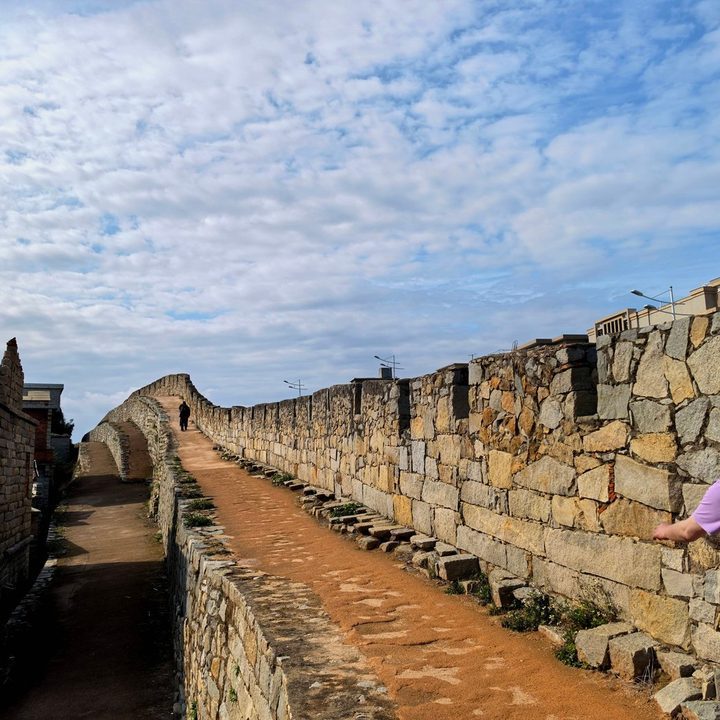
Chongwu Ancient City: Granite Walls and Sea Spray
Ming-era coastal fortress in Hui’an — walk the battlements, watch fishermen mend nets, and time your visit for low tide.
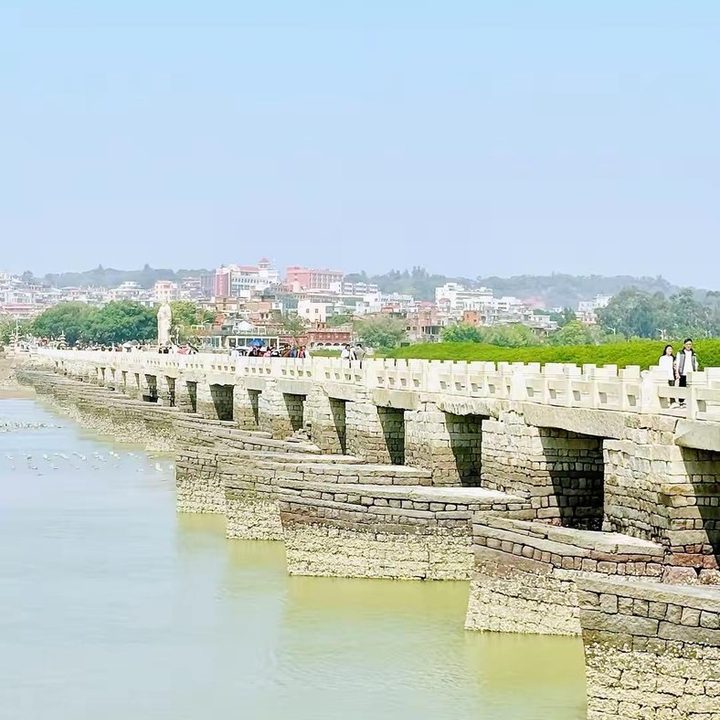
Luoyang Bridge: Song Stones Across the Luoyang River
One of China’s oldest cross-sea stone bridges — oyster-encrusted piers, Wen Temple at the north end, best at rising tide.
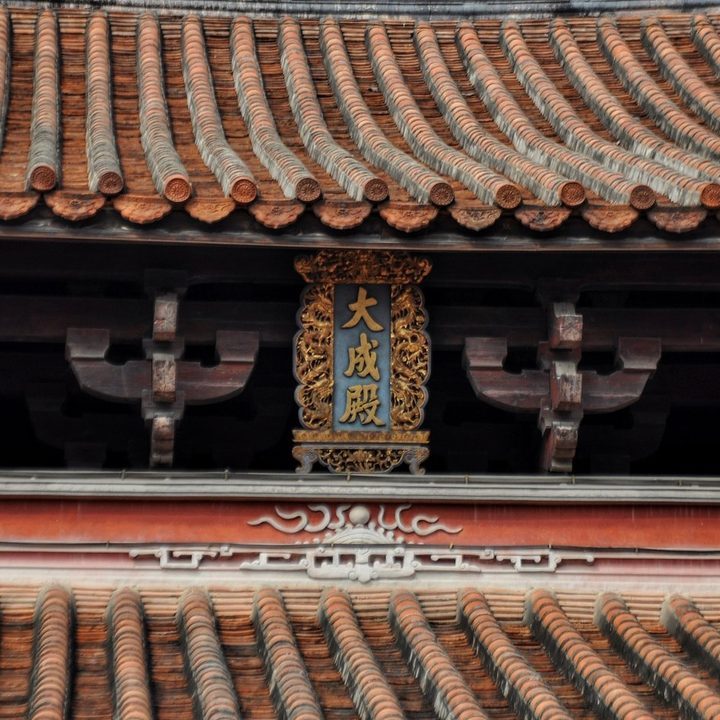
Quanzhou Confucian Temple: Song Bricks and Exam Halls
Large southern Confucian complex on Tumen Street — red walls, ancient banyan shade, and a quiet courtyard away from the crowds.
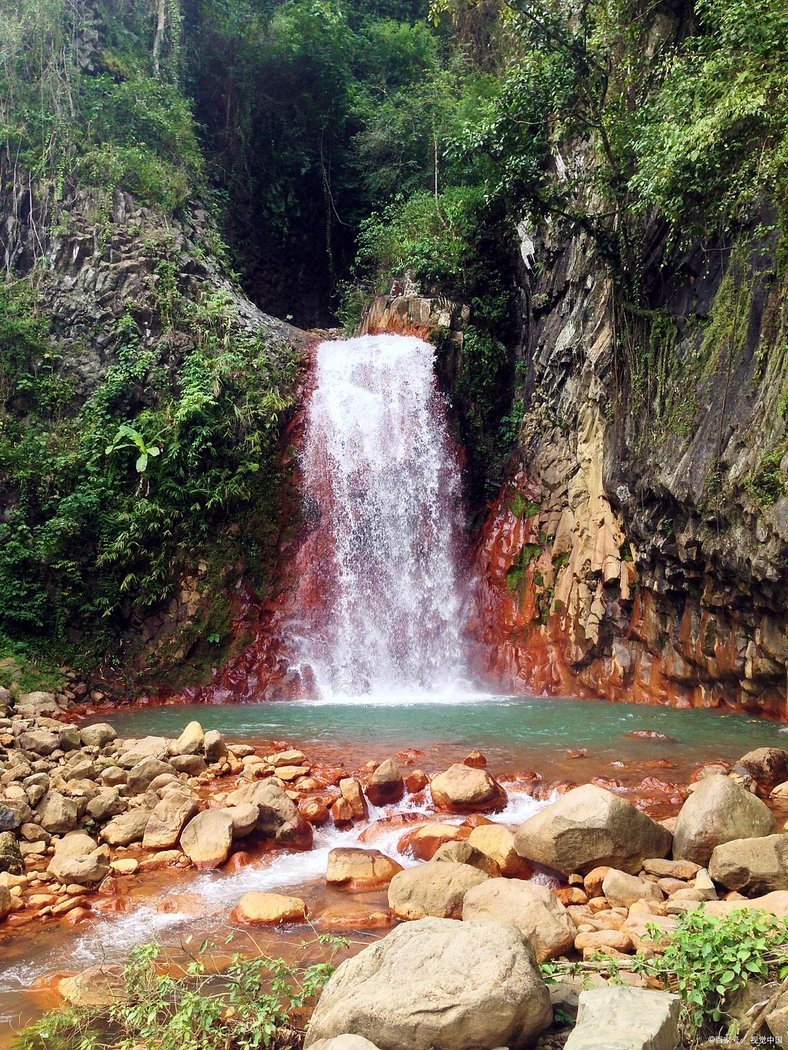
Niulincun: Cloud Forest and Sky Walk in Yongchun
Subtropical nature reserve 40 km from downtown — canopy trails, cable car views, and cooler air in summer.